Mostrando entradas con la etiqueta BACH 2nd. Mostrar todas las entradas

domingo, 24 de marzo de 2019

ORAL SKILL: ASKING AND GIVING ADVICE


Have you heard about TIPS FOR A SAFER INTERNET DAY?

 Safer Internet Day, or SID for short, tries to help people to use the internet correctly. SID started in 2004 and is organised in February every year in 74 countries around the world to promote safe and responsible use of online technology and mobile phones. Each year there is a different topic such as cyberbullying or social networking. The focus for SID’s next campaign is ‘Let’s create a better internet together’. SID organisers want children and young people, parents and carers, teachers and educators, as well as industry and politicians to work together to build a better internet for all of us, but particularly for children and young people. 

Source: Learning English British Council 

Click on the next link to find out about it...

Imagen relacionada

Click on the next ICON and find out about functional language used when asking and giving advice.


Resultado de imagen de GIVING ADVICE


domingo, 20 de enero de 2019

WRITING SKILL: A FORMAL LETTER

"Hard-working young assitant wanted for part-time work in a bookshop during July/August. No sales experience needed, but a good understanding of English is essential". Apply in writing to Bookworms.

"Large departmet store seeking young shop-assistants for full-time work during summer time. Previous sales experience needed and a mastery of two languages required (English and Spanish)". Send a letter of application to ZARA fashion shop.

These are 2 job advertisements to work in summer time and earn some extra money. 

Formal letters are usually written either:
- to apply for a job
- to ask for information
- to make a complaint

They are normally sent to people in an official position or people you don't know well (Director of Studies, Personnel Manager...) therefore, they are written in a formal style with a polite, impersonal tone.

A formal letter should consist of:
- a formal greeting (Dear Sir/Madam, when you don't know the person's name; Dear Ms Green, when you know the person's name).
- an introduction in which you write your opening remarks and mention your reason for writing (I'm writing to apply for the position of ...)
- a main body in which you write about the main subjects of the letter in detail, starting a new paragraph for each topic.
- a conclusion in which you write your closing remaks (I look forward to hearing from ñyou as soon as possible...)
- a formal ending (Yours faithfully, when you don't know the person's name, Yours sincerely, when you know the person's name ; + your full name).

Find some guidelines for structure and style in the icon below.
Imagen relacionada

Again, click on the writing icon to find a model to follow.
Resultado de imagen de my letter of application


Remember, practice makes it better!!

domingo, 13 de enero de 2019

ORAL SKILL: FITNESS

Resultado de imagen de FITNESS PILATESFITNESS activities are much varied and motivating than before and sure there is a reason for all these new methods being introduced today.

Yoga, AeroPilates, Functional training routines, Cardio sessions, BodyPump, KettleBell workouts... you name the lot...


Here is a link to a different kind of physical activity, outdoor proposals for adrenaline junkies. Watch and find out a bit more about its benefits, risks and history behind.

Resultado de imagen de extreme sports


Now it is your turn to do some research and elaborate a brief presentation in class about new fitness methods. Click on the icon to see some motivating pictures. Do you know any others? Go for them!!


Imagen relacionada 

And finally, here is a link to a B1 presentation about sports you can use as an example for your brief presentation in class                  (Source Marek Connell)       Resultado de imagen de B1 level

GRAMMAR SKILL

Resultado de imagen de i love conditional sentences 

CONDITIONAL SENTENCES are studied at different stages during your learning. Here is a doc with some further exercises for you to revise, reinforce or go a little further into your English mastery.

Remember PRACTICE makes PROGRESS.

 Imagen relacionada

domingo, 16 de diciembre de 2018

GRAMMAR SKILL


Resultado de imagen de the passive voice

The PASSIVE VOICE is very frequently used in English (both oral and written language), and so English students must have a good understanding of structure and tenses.

Further to the  work in class, here are some extra activities for you to work at your own pace. Remember, practice is a must in learning a language.

 Resultado de imagen de doc word

But, PASSIVE VOICE is not only writing down exercises. Here are different VIDEO links where you can find the use of PASSIVE VOICE in real context while learning on different interesting topics. 
You may want to check understanding by doing the interactive activities after the videos (source British Council Learning English)
Imagen relacionada            Resultado de imagen de windsor castle

Resultado de imagen de christmas tree

sábado, 15 de diciembre de 2018

SPEAKING SKILL: MY IDEAL JOB


MY IDEAL JOB
Earn a salary, make a living, develop your professional career, find personal satisfaction, belong to a team, develop some international project, grow up as a person... these might be some of the reasons why you choose one job or another.

You might be required to think about professional prospects and job profiles. Here is some food for thought for you to watch...


Job interviews can be a difficult time for the candidate, watch this video and guess whether she got the job in the fashion magazine or not.


Again, this is a funny clip on some of the worst job interviews you might think of...


Now, what is your ideal job like?
See the clip below and find out if our guessing matches your likes or not...

My best job ever 


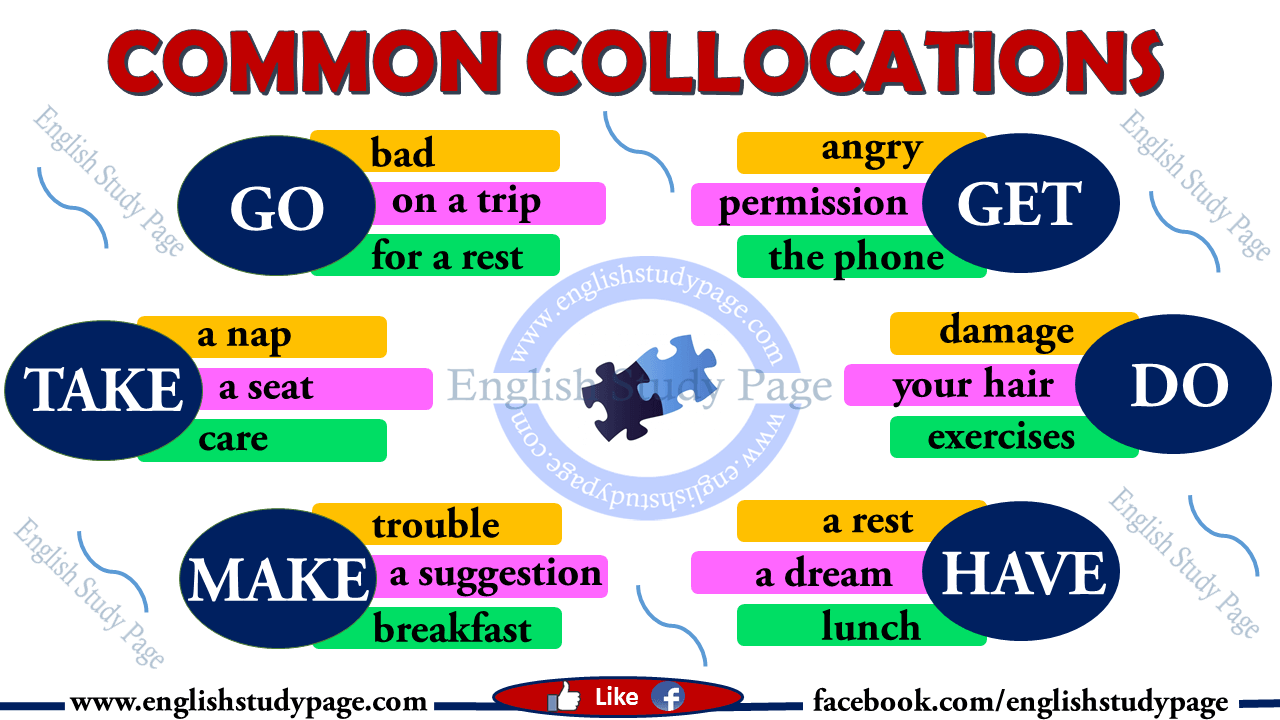
LEXIS SKILL: COLLOCATIONS


Resultado de imagen de collocations bbc learning english


Collocation refers to words that are found together in language. Collocations can be fixed, where it is difficult to replace one of the words with an alternative, or freer, allowing for more choice of words.

Example
'Utter disaster' is a fixed collocation, as there are few words that can be used instead of 'disaster'. 

'Make a cake' is a freer collocation, as there are many words that can be used instead of 'cake'.

In the classroom Collocations often have to be memorised; the best way to learn collocations is to read authentic english texts and keep a record in your notebook. Later, you can further use them in your essays. 


In order to offer you further resouces to improve lexis and the use of COLLOCATIONS, find linked some activities to practice.

First, here is a list of common collocations you can use to talk about job conditions.

 Imagen relacionada
Source: British Council Learning English

Secondly, here is a group of activities to improve not only collocations but lexis in general.
 Imagen relacionada


Finally, a verb collocations and miscellaneous collocations list you can make use of in your writing tasks and oral presentations.
Resultado de imagen de collocations

domingo, 11 de noviembre de 2018

CONDITIONAL STRUCTURES


Have you seen the movie "The Curious Case of Benjamin Button?" Quite a
fascinating movie, isn't it? I bet you'd never expected to use it in class as a tool to review CONDITIONAL SENTENCES, however, here is a link for you to watch and ...


Now, click on the icon below and do the activity suggested.
Resultado de imagen de doc word

FUTURE TENSES REVIEW

Talking about the FUTURE, expressing FUTURE PLANS and MAKING PREDICTIONS are common topics of conversation in English.

- Are you doing anything interesting this evening?
- What time will we be landing?
- When is the next train to Edinburgh?
- Are you going to ask for a new mobile at your birth day?

Here you have an ICON to review Future structures and another ICON to practice further. Make the most of this entry

Resultado de imagen de future tenses

Resultado de imagen de word

martes, 6 de noviembre de 2018

MODAL VERBS


I bet you know lots of MODAL VERBS and you use them when singing or watching your favourite movie. Watch the video and find out how frequently used they are:


Now, click on the delicious icon and practice a little further:
Resultado de imagen de A CAKESource bbc learning english

Then click on the word document for a summary of MODALS and uses. Remember, you must try to avoid translation and understand uses.
 Imagen relacionada

Click on the following ICON to see further grammar guidelines and exercises to practice BTO level and click on ICON 4 to practice 4th year level
Resultado de imagen de icon 4


Resultado de imagen de MODAL VERBS

lunes, 5 de noviembre de 2018

GERUNDS AND INFINITIVES

"George is coming to the concert with us. Did you...?
- remember to buy him a ticket?
- remember buying him a ticket?

"Ann got really mad at me and refused to see me so...
- I tried to send her flowers but still it didn't work.
- I tried sending her flowers but still it didn't work.

So which one of the 2 options is correct? Is there any difference when using one verb pattern or another?

Sure you want to know so click on the icon and do some practice.
Resultado de imagen de grammar point           Resultado de imagen de practice

jueves, 1 de noviembre de 2018

WRITING SKILL


WRITING AN OPINION ESSAY

 Opinion essays are a common writing task for students because it is necessary to state your opinion and support it with sound argumentation.

Imagine you are in the middle of a discussion: "should healthcare be free?", there are different viewpoints you should try to match to their possible reasoning.

1. free healthcare is a basic human right
2. people who can afford it should pay for their treatment
3. more time and money should be spent on health education

a. people would learn to have healthier lifestyles, so fewer people would be ill
b. everyone deserves free medical treatment when they are ill
c. more money could be spent on treating those who really need it 

Click on the icon below and work on the guidelines to produce good essays with adequate paragraphs, supportive argumentation and sound closing paragraphs.

Source "Successfull Writing"

 Imagen relacionada

miércoles, 31 de octubre de 2018

SPEAKING: DESCRIBE A PICTURE


Resultado de imagen de describing a picture b2 at the top at the bottom

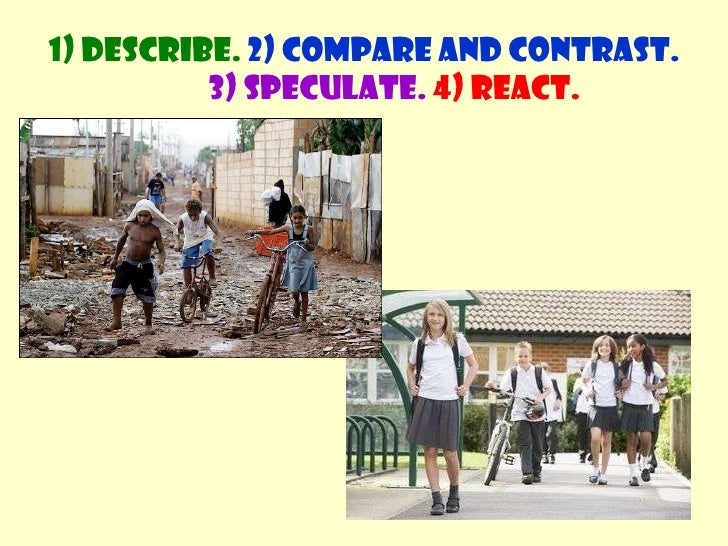
It is time now to focus in DESCRIBING PICTURES, as it might be one of the tasks required in your oral test.


 Here are some tips:
DO
Look carefully at the photo. Think carefully how to start. In some exams you are given some time to think about what you are going to say. Use that time! 

Scan the picture and identify the topic. It is better to start with a general statement. 
For example, They are clearly both connected to the topic of science… but in two quite different contexts. Use present continuous to describe what is happening.

Remember the pictures are just an excuse to talk about the topic, so don't give a very detailed description. Select the relevant details Sometimes there is a question or a statement to help you identify the topic. Sometimes, you can find a word-cloud with some ideas (ex nightlife, pollution, facilitites) to help you talk.


Use a wide range of vocabulary. Remember this is a picture so you cannot be 100% sure what is happening. Use appropriate language to show you are guessing.

Speculate about the pictures. You are not asked simply to describe what is happening.  
For example: He is likely to / she’ll probably find it quite tough

Give your opinion, using a variety of structures. If the photographs surprise you, show surprise -your voice should reflect your feelings and attitude. Don't forget to develop your ideas. Don't forget to use Linking Words to connect your ideas.

Use all the time you're given. If you're given 2 minutes, you'll need to talk the 2 minutes. Practise!

DON'T

Don't use the present simple to describe what is happening
Don't give ennumerations
Don't use "I think…" all the time.
Don't give complicated explanations if you are not sure.

Don't stop talking until the examiner indicates the exam has finished
Don't worry if you don't understand immediately what is going on in the picture. 
Remember you are allowed some time to organise your ideas. Use it!

Don't worry if you don't know the precise word for what you can see; paraphrase Don't talk about something that is not relevant to the pictures


SPECULATING

I think / I guess/ I suppose it is... I expect/ I imagine it is... It/he must be.... It /he can't be I am not sure but, they could be.. It's not very clear but, probably... I can't make it out but, perhaps Maybe, perhaps they are...
They seem to be  eating something It can/could/might (not) be .... Probably/Perhaps

* It is used to write....
* It is something you do when...
* It's a person who...
* It' something which
* It's a kind of/some kind of..
* It's a sort of/some sort of ...
* It's like a ...

ILLUSTRATE USING
For example... For instance... such as...


GIVE OPINION
• As far as I know… • Speaking for myself… • In my opinion… • Personally, I think… • I'd say that… • In my experience… • I'd like to point out that… • I believe that… • What I mean is… • My personal view is that • I might be wrong but … • It seems to me that..

I think I'd prefer... as... If I had to choose I would... It's very hard to say but ....


Click on the link to see a video illustrating some basic tips to improve your performance.
source: Diana's English films and lessons
Imagen relacionada

lunes, 22 de octubre de 2018

SPEAKING SKILL: COMPARING PHOTOS


Resultado de imagen de COMPARING PICTURES

"You have 5 minutes to look at the card provided very carefully. Pay attention to similarities and differences and compare the pictures please" 

This is a very common task in a SPEAKING EXAM. 

Unless you prepare the task carefully, you will end up describing the scene and finding nothing else to say to the examiner. "... and I don't know what else to say..."


Click on the SPEAKING icon and find out the guidelines to help you prepare this task. After preparing, team up with a friend and try speaking to him / her. Preparing this task with other person is very useful, and don't forget to time your turn. You will be expected to speak for at least 2 minutes.

 Imagen relacionada
Source: Oxford Premium B2
 Resultado de imagen de speaking

miércoles, 18 de octubre de 2017

GUIDELINES FOR DESCRIBING PICTURES


DO
Look carefully at the photo. Think carefully how to start. In some exams you are given some time to think about what you are going to say. Use that time! 

Scan the picture and identify the topic. It is better to start with a general statement. 
For example, They are clearly both connected to the topic of science… but in two quite different contexts. Use present continuous to describe what is happening.

Remember the pictures are just an excuse to talk about the topic, so don't give a very detailed description. Select the relevant details Sometimes there is a question or a statement to help you identify the topic. Sometimes, you can find a word-cloud with some ideas (ex nightlife, pollution, facilitites) to help you talk.

When comparing the pictures, talk about the similarities and differences between them.  
For example: Both pictures show… but this one…, whereas the other one…

Use a wide range of vocabulary. Remember this is a picture so you cannot be 100% sure what is happening. Use appropriate language to show you are guessing.

Speculate about the pictures. You are not asked simply to describe what is happening.  
For example: He is likely to / she’ll probably find it quite tough

Give your opinion, using a variety of structures. If the photographs surprise you, show surprise -your voice should reflect your feelings and attitude. Don't forget to develop your ideas. Don't forget to use Linking Words to connect your ideas.

Use all the time you're given. If you're given three minutes, you'll need to talk the three minutes. Practise!

DON'T

Don't use the present simple to describe what is happening
Don't give ennumerations
Don't use "I think…" all the time.
Don't give complicated explanations if you are not sure.

Don't stop talking until the examiner indicates the exam has finished
Don't worry if you don't understand immediately what is going on in the picture. 
Remember you are allowed some time to organise your ideas. Use it!

Don't worry if you don't know the precise word for what you can see; paraphrase Don't talk about something that is not relevant to the pictures


SPECULATING

I think / I guess/ I suppose it is... I expect/ I imagine it is... It/he must be.... It /he can't be I am not sure but, they could be.. It's not very clear but, probably... I can't make it out but, perhaps Maybe, perhaps they are...
They seem to be  eating something It can/could/might (not) be .... Probably/Perhaps

* It is used to write....
* It is something you do when...
* It's a person who...
* It' something which
* It's a kind of/some kind of..
* It's a sort of/some sort of ...
* It's like a ...
CONTRAST USING

In both pictures... Both pictures depict .. In this one .. and in the other one...
Both of the photos show..
Neither of them .... Similar to... The same as Like... In the same way....
Whereas While On the one hand... on the other hand
Instead of Unlike.....
ILLUSTRATE USING
For example... For instance... such as...

COMPARE
The main difference between the photos is... In the first picture...whereas the other picture... Unlike.... this looks like... In contrast...

GIVE OPINION
• As far as I know… • Speaking for myself… • In my opinion… • Personally, I think… • I'd say that… • In my experience… • I'd like to point out that… • I believe that… • What I mean is… • My personal view is that • I might be wrong but … • It seems to me that..

I think I'd prefer... as... If I had to choose I would... It's very hard to say but ....


miércoles, 11 de octubre de 2017

The Tell-Tale Heart by EDGAR ALLAN POE


Resultado de imagen de tell tale heart
Students read the first paragraph of the story and write down three predictions about what the story will be about based on the title as well as the diction and tone used by the narrator in this first paragraph.


TRUE! – nervous -  very, very dreadfully nervous I had been and am, but why will you say that I am mad? The disease had sharpened my senses – not destroyed- not dulled them. Above all was the sense of hearing acute. I heard all things in the heaven and in the earth. I heard many things in hell. How, then am I mad? Hearken! And observe how healthily – how calmly I can tell you the whole story.


2.      Suggest the literary clues in the text that led you make those predictions. Why is the passage a good example of foreshadowing? Explain how the passage sets the tone and mood of the story.


3.      See the animated video BY Annette Jung below to learn about tone and mood.


4.      Choose some quotations from the text that best describes the tone and the mood in the story.


Finally, if you want to learn a little about the author, here is a link to a short bio.


And here is a linkto the pdf of the story:

THE VEILED LADY by AGATHA CHRISTIE


Resultado de imagen de agatha christie


Agatha Christie is the best-selling novelist in history, outsold only by the Bible and Shakespeare. She is known throughout the world as the Queen of Crime.
 
Follow the link below and find out some more information about the writer and the short story we must read.

1.    Make a summary of Christie’s thrilling life and use a timeline to present it.

2.    Surf the news about the author and tell me which news caught your attention and why.

3.    After reading the story, answer the following questions
-          Does the outcome of the story surprise you? Why?
-          Is the conclusion plausible within the framework of the story?
-          What would you have done if you were Lady Millicent and Poirot did not exist?
-          Where would you have hidden the letter and the box if you were Mr. Lavington?
-          In your opinion, did Hastings hurt Poirot’s feelings when he said that he was unknown to the criminal world?
-          Think of a different ending for the story.